RIGHT FIRST TIME: AVOIDING COMMON ERRORS IN PIPE SUPPORT SELECTION
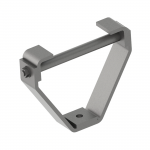
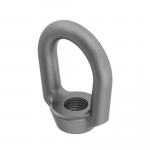
An M12 eye nut can’t be used with a DN400 clamp, and component clashes like this are easy to miss when a hanger is built from loose parts on paper. Get the thread size, clamp type or attachment method wrong and it shows up later as site rework, a hot-work delay or corrosion.
This practical, 30 minute webinar investigates common errors in pipe support selection that can add delays or costs to projects, showcases Anchorage’s Hanger Design configurator and tips on good hanger design and walks through some easy ways to create custom parts from our standard catalogue.
Presented by Riley Williams (Project Consultant), Roger Shemilt (Head of Product) and Brad Pearse (Senior Engineer) from industrial pipe support specialists Swift Metal Australia.
What the webinar covers
- Choosing the right pipe support for each application, and the mismatches we see most often in the field
- How to specify a custom or non-standard pipe support and get what you asked for
- When customisation adds real value, and when it just adds cost and lead time
- Pipe hanger configuration basics that are easy to overlook at design stage
Right First Time: Avoiding Common Errors In Pipe Support Selection Webinar Q&A
1) What surface protection options are there for fasteners besides galvanising?
Galvanising is the one we see most, but there are several alternatives depending on the environment:
- Stainless steel fasteners instead of galvanised.
- Xylan (a Teflon-based coating), which comes in a range of grades and colours and suits highly corrosive conditions.
- Duplex or super duplex, which can be used for the fasteners and for the supports themselves.
- A paint system, applied by the client once the supports are installed.
2) Should fasteners be listed separately in a specification, or are they part of the supports?
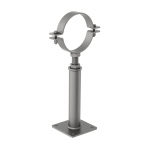
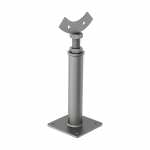
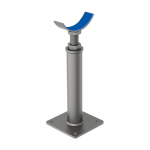
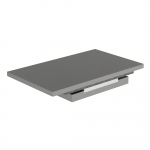
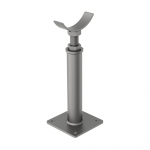
It depends on the product. Saddles generally come with fasteners. Our standard Height Adjustable Pipe Stands don’t, because the fixing depends on what they’re mounting to, and that could be concrete, steel or another structure.
3) Can you help when a standard product can’t be modified and something bespoke is needed?
Yes. We can work through a custom solution with you and manufacture it in a range of materials, including Permali, Durostone and Permaglass. With roughly 400 years of combined experience across the team, there’s a good chance we’ve dealt with a similar problem before, so get in touch and we’ll talk it through.
4) What are typical lead times for standard and custom supports, not counting special materials like duplex?
Stock items often ship within 24 hours. Standard items made to order take 3 to 4 weeks. Custom supports average 4 to 5 weeks from drawing approval, depending on quantity and complexity.
5) What should we watch for when supporting above-ground HDPE pipe compared with metallic pipe?
The big one is movement. HDPE expands and contracts far more than metallic pipe, so the support design needs to allow for it. Other points to consider:
- HDPE can’t span as far as steel, so supports need to be closer together.
- Depending on the layout, movement can be managed with expansion loops or sliding shoes.
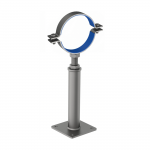
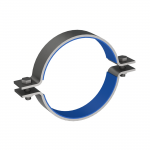
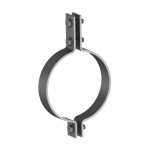
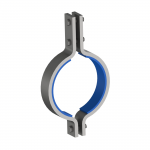
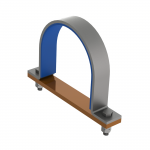
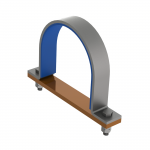
- Clamps often need a rubber lining against the pipe, particularly where the pipe moves or is restrained. Without it, the pipe wall can be damaged by repeated movement against the clamp.
- Not all HDPE is the same. Some suppliers offer white pipe alongside standard black, and movement can differ between the two.
6) How is the working load for a complete hanger worked out?
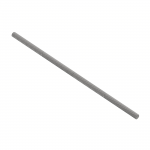
Every component in a hanger (threaded rod, nuts, clamps and so on) carries its own working load. The working load for the complete assembly is the lowest rating of any part in it. In most cases that’s the threaded rod, so its rating becomes the rating for the whole hanger.
7) How can supports dampen vibration on pipework subject to high surge?
The right option depends on the level of vibration:
- Rubber membranes and other elastomeric products can be built into pipe clamps, shoe bases and similar parts to reduce vibration passing into the rest of the plant.
- Hydraulic snubbers are mainly used for shock loads but can also dampen vibration. They connect to the pipe through a dynamic pipe clamp. There are many styles available, so we’d need to understand the application before recommending one.
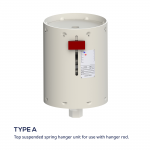
8) Offshore, can-type supports are often chosen over spring hangers, but the spring inside the can still corrodes. Can the spring coil material help?
Yes. Stainless steel spring coils are available and resist corrosion much better than our standard steel coils. They cover around 75% of our range, as stainless isn’t available in every size we use.
9) Can you supply bolt isolation kits using Teflon insulation? We use it in water tanks because it’s AS/NZS 4020 compliant.
Bolt isolation kits aren’t a standard product, but we can work with you on a kit built around the material you specify. We use Teflon insulation regularly, both to separate dissimilar materials and in slide plate applications, so we can source it in every available thickness and grade.
NEXT STEPS
If you are working on a live project, you may find these extra resources useful.
- Design pipe support hangers using our online configurator
- Use Swift’s specification checklist to ensure key information is covered
- Book in a consultation with one of our Project Consultants before you lock in your design

 AG630