WHS Act 2011 and pipe supports: what engineers and contractors in water and civil infrastructure need to know
Pipe supports in water and civil infrastructure projects are often treated as a procurement afterthought. Under Australian work health and safety law, they are anything but.
What the WHS Act 2011 requires
The Work Health and Safety Act 2011 imposes a primary duty of care on persons who conduct a business or undertaking. For pipe supports, this applies to designers, specifiers, suppliers, and installers, not just the contractor on site.
A designer must ensure plant or structures are designed to be without risks to health and safety, so far as is reasonably practicable. A supplier must ensure the plant or structure is without risks when used for its intended purpose. A contractor must install in accordance with the design intent.
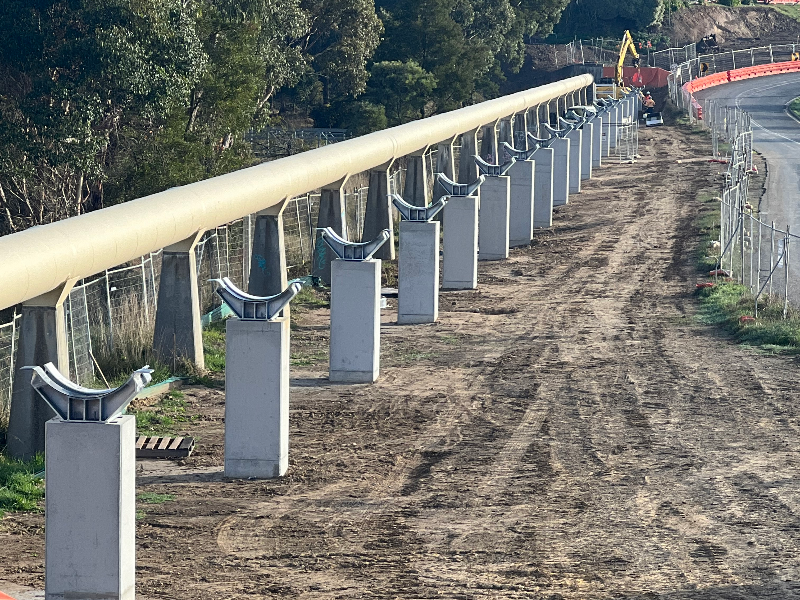
These obligations apply on every project, including water treatment plants, pump stations, wastewater infrastructure, and civil pipeline work.
AS/NZS 3500 and support spacing
AS/NZS 3500.1 is the Australian and New Zealand standard for water services. It includes mandatory requirements for pipe support spacing based on pipe material and diameter.
For copper and stainless steel piping, support spacing ranges from 1.5 to 3.0 metres depending on diameter. For PVC and polyethylene, spacing ranges from 0.5 to 2.0 metres.
These are mandatory requirements. Exceeding them without engineering justification is non-conformance.
what this means for specifiers
Water and civil infrastructure projects often have long operational lives, decades in some cases. A pipe support that is undersized, incorrectly specified, or made from the wrong material for the environment does not reveal its problems immediately. It reveals them years later, during a maintenance inspection or after a failure.
Specifying on price creates exposure. The specifier must ensure the selected product is fit for purpose: correct load rating, correct material for the environment, correct configuration, complete documentation.
On projects with strict completion deadlines, hold points caused by non-compliant pipe supports are not merely a compliance problem. They can quickly become a commercial dispute, leading to more delays and risk.
what this means for contractors
Installation must follow the design intent. Support spacing must match the specification. Height adjustment within the specified range is acceptable, but modifying or substituting a specified support without engineering sign-off is not.
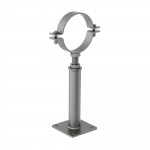
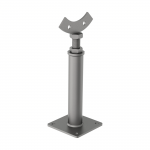
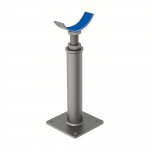
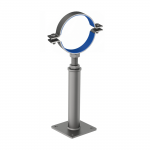
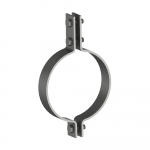
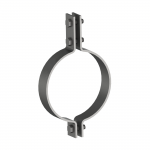
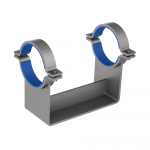
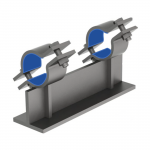
For example, a height adjustable support has an adjustment range of 60mm up, 60mm down from the nominated base of pipe. Installing outside that range without approval is a non-conformance.
documentation matters
QA/QC records form part of the compliance evidence on regulated projects. For water utility projects in particular, handover documentation requirements are often detailed. Material certificates, product compliance data, and installation records must be complete before handover is accepted.
Where anchorage fits in
Anchorage supplies standard pipe support components with full product documentation. For height adjustable supports, BIM and CAD files are available for download directly from product pages, including Revit, AutoCAD, and STEP files, which support specification accuracy and reduce the risk of errors between design and installation.
Anchorage’s team works with specifiers at the front end to confirm the right standard product against actual project requirements. That conversation reduces the risk of hold points, rework, and substitutions later.
The compliance obligation remains with the project design engineer and the contractor. Anchorage provides product support only.
If you’re specifying pipe supports for a water or civil infrastructure project and want to understand what documentation is available, contact the Anchorage team:

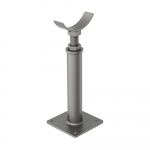
 AG630
AG630