Detailed Engineering Explanation
In many infrastructure environments, welding to pipework is restricted due to safety policies, operational constraints, or coating protection requirements. Mechanical pipe support systems provide structural restraint without the need for hot works.
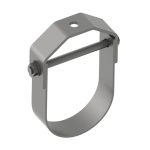
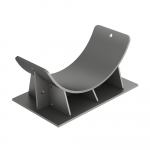
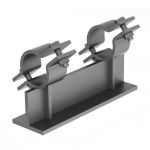
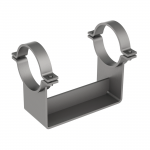
Common non-welded support types include:
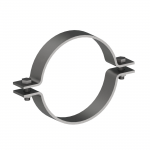
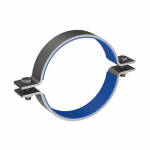
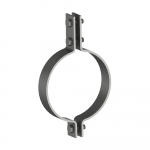
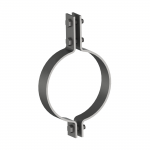
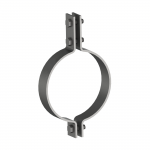
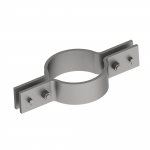
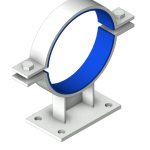
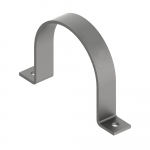
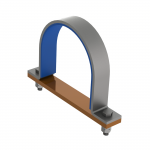
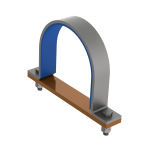
- Clamp-On Pipe Shoes
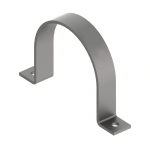
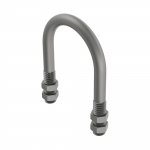
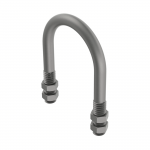
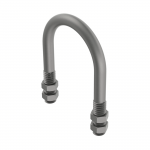
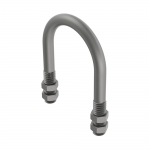
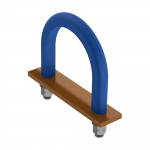
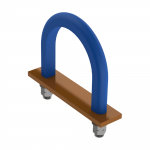
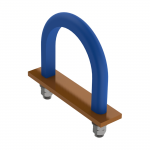
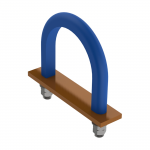
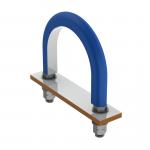
Mechanically secured around the pipe using bolted assemblies. Suitable for coated or insulated pipelines. - U-Bolt Supports
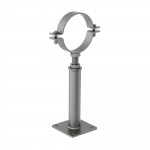
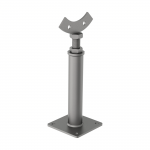
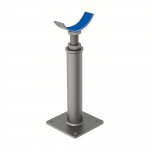
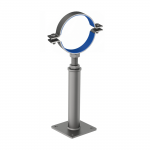
Threaded rod assemblies that secure the pipe to a structural support. Commonly used in general plant services and smaller diameter systems. - Adjustable Pipe Stands
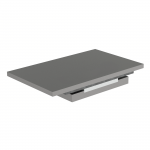
Free-standing or baseplate-mounted systems that allow elevation control without modifying the pipe. - Saddle Clamps
Designed to cradle the pipe while allowing axial movement, depending on configuration.
Advantages of non-welded supports include:
- Reduced installation time
- Elimination of hot work permits
- Protection of existing coatings
- Simplified maintenance and future modification
Selection should consider load requirements, axial restraint needs, and environmental exposure.
Technical Highlights
- Suitable sizes: DN25 to DN1200+ (system dependent)
- Materials: HDG carbon steel, 316 stainless steel
- Installation: Mechanical fastening only
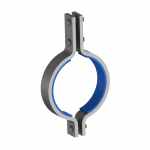
- Optional isolation pads: Neoprene or high-temperature insulation pads
- Slide capability: PTFE plates for axial and/or lateral movement
- Compliance: ISO 9001, MSS SP-58
Industry Application – Water & Municipal Projects
In wastewater treatment facilities, shutdown periods are limited and safety controls are strict. Mechanical support systems allow upgrades or modifications without welding.
In municipal infrastructure projects, clamp-on and adjustable systems improve installation speed and reduce compliance complexity.

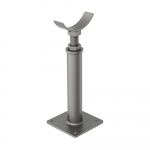
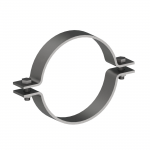
 AG630
AG630