Pipe Support Specification: Where Rework Really Starts
Pipe supports are small line items on big projects. When they go wrong, the cost lands on site: reorders, offsite welding, and installs that slip by days.
In our Right First Time webinar, Project Consultant Riley Williams walked through where those problems begin and how to close the gaps while the design is still on paper.
A lot of the problems we see on site… start a lot earlier, when a takeoff is created from a specification and essential context is missed that the supplier needs to supply the right solution.
And when that context goes missing, as Riley put it, “the cost can turn up weeks, months, or even years later as a reorder, a failure, or project delays.”
Here are seven checks to run before your specification goes out.
1. Describe the installed condition
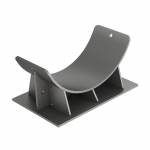
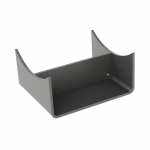
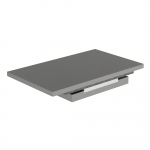
A sliding pipe shoe and slide plate arrived exactly as ordered. Correct product code, correct quantities, on time.
On site, the two parts had to work as a single welded assembly, and hot work wasn’t allowed. Structural steel and pipe spools went offsite for welding, and installation was delayed by days.
One line on the drawing about how the parts work together would have flagged it before the order was placed. Send the drawing context with the takeoff, and include:
Base of pipe (BOP) and nominal pipe size (DN)
Pipe OD, material, and coating or insulation thickness
Full operating temperature range
Static or dynamic load, plus expected movement
Environment (indoor, outdoor, coastal, corrosive) and required finish
Installation constraints, such as hot work restrictions or limited access
Connection method to steel or concrete
Relevant codes and inspection documents (AS 4041, AS 2885, etc.)
With that detail upfront, our team can give technical input early, based on the information supplied, while changes are still easy to make.
2. Replace duty labels with load data
Don’t rely on light, medium, or heavy duty. There’s no standard definition of these terms.
Every manufacturer rates these labels differently, so two “heavy duty” clamps from different suppliers can carry very different loads. Specify:
Rated load for the pipe size
Load direction (vertical, lateral, axial)
Static or dynamic load
Whether safety factors are already included
3. Give each service its own load specification
On one project, the same support system was used for air ducting and a slurry line. The supports met every safe working load on the ducting, but they were sized for a far heavier service, and the contractor ended up over $100,000 out of pocket. Riley explains it in the clip above.
4. Lock in materials and corrosion protection
Corrosion is one of the most preventable causes of pipe support failure, yet it still shows up regularly. Typical causes:
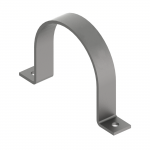
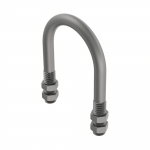
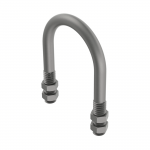
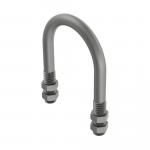
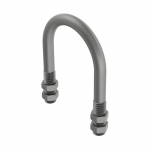
Non-insulated U-bolts against coated or stainless pipe
Stainless U-bolts through galvanised steel without isolation
Cost-driven substitutions
Supports that don’t suit the environment (coastal, chemical, buried or UV exposure)
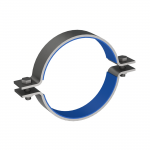
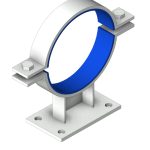
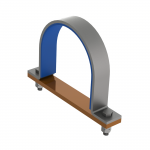
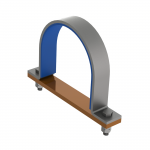
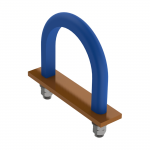
Where dissimilar metals meet, insulated pipe supports separate the pipe from the support structure. On cathodically protected pipelines, isolation matters even more.
If the project needs duplex, chrome moly or a specific paint system, call it out early.
Where the material is specifically selected to avoid galvanic or atmospheric corrosion, it needs to be clearly stated that material substitution needs to be expressly approved.
5. Start custom work from a standard product
Most custom requests don’t need a design from scratch. Give the standard product code, mark the modification on the drawing, and state what changes, for example:
A different gasket material
Changed bolt positions
Retaining lugs added
Then add why the standard product doesn’t work. It gives everyone the same starting point and leaves less to interpretation.
6. Keep pipe supports as their own scope
Supports often sit on the critical path for pipe spool installation. Bundled into structural steel or spool packages, they’re easy to lose track of. A dedicated package keeps procurement aligned with installation, and gives early warning when duplex, super duplex or other unusual materials will stretch lead times.
7. Use manufacturer design files for clash checks
Generic models don’t always match the real clamp geometry. Manufacturer design files make space proofing and clash checks reflect what will actually arrive on site.

 AG630